


Australia's Largest Ever
Social & Environmental
Impact Experiment
A national experiment in behaviour change — built on a consumer-funded mechanism that already moves over a billion dollars a year, and a question the existing scheme has not yet answered: what would it take to move the people that ten cents doesn't?


First, understand where the money comes from.
Australia's container deposit schemes are not government grants. They are a consumer-funded mechanism that already moves over a billion dollars a year. Here's how they work, in four steps.
You buy an eligible drink
The price includes a 10c refund value.
That 10c is built into the scheme
It's consumer money, paid at the checkout.
Return the container
You claim the 10c back through a refund point.
Don't return it
The 10c stays unclaimed — litter, landfill, or kerbside.
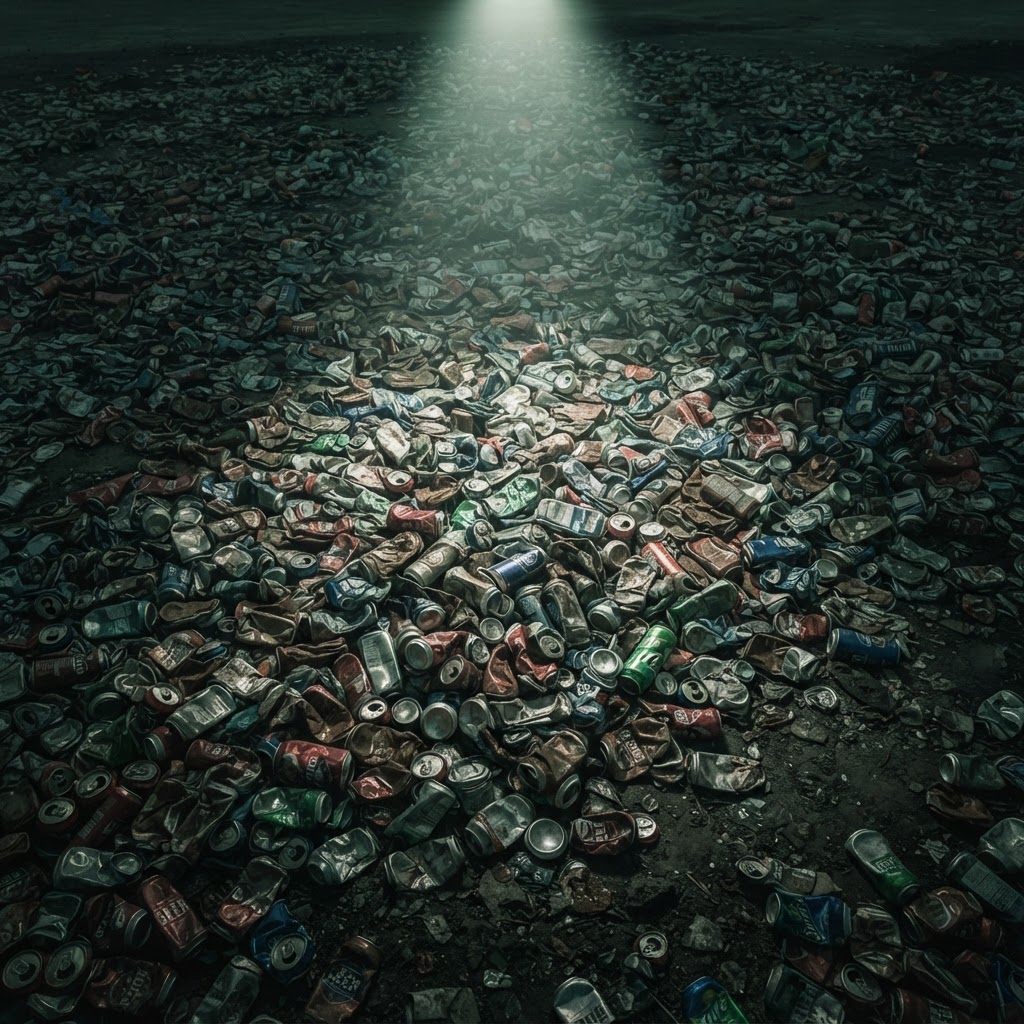
SO WHAT GOES WRONG?
Australians throw away 10c on 4 billion containers every year.
Unclaimed deposits. Containers in litter and landfill. Consumer money that never returns to the people who paid it.
10c already gives Australians a reason to return. But billions of times a year, it doesn't overcome —
What moves the people 10c doesn't?
Australia already has everything but the behaviour.
Single-use containers
✓ EXISTSRefund infrastructure
✓ EXISTSThe 10c mechanism
✓ EXISTSMillions participating
✓ EXISTSNon-returners who can start
People who currently throw eligible containers away — litter, landfill or kerbside — can be given a more compelling reason to begin returning them.
Existing returners who can redirect
People who already return containers can choose to participate through the Games rather than simply taking the conventional refund. The model strengthens from within.
The unclaimed $500M+ includes containers sitting in kerbside bins — heading to Material Recovery Facilities, never redeemed. The full market we could shift behaviour across is worth over $1.2 billion a year.
When household budgets are under pressure, "here's ten cents" is very different from — the container you were about to throw away can now put you in the game.
The problem isn't the container.
It's how that value is experienced.
BEFORE
10c
You drop the container. You take 10c. You forget. The can is still just a can — a transaction, finished.
AFTER
+10 PTS
You drop the same container. Your phone lights up. Points, prizes, teams, causes — the can becomes a game you want to keep playing.
The same 10 points can connect you to —
What would you play for?










Different motivations. Same positive behaviour. Someone may not care about ten cents — but they might care deeply about what it could become.
We're not making 10 cents bigger. We're making it matter more.
This is what people could be playing for.
Not every prize shown is currently available. The intent is to make the scale of the reward universe immediately obvious — from 10 cents to a life-changing opportunity.
Small cash
Larger cash
Technology
Holidays
Experiences
Motorbikes
Cars
4WDs
Jet skis
Boats
Homes
Beachside homes
Earning 10 points connected to hundreds of millions of dollars
of potential future reward value at scale — not 10 cents.
How someone actually participates.
No new infrastructure. No change to the scheme. The consumer uses the existing return system and simply redirects their refund into the initiative. Five steps.
Return
Return eligible containers through the existing container deposit scheme infrastructure.
Select
Choose the 10c Recycling Games member pathway where available, instead of the standard payout.
Contribute
The eligible refund is directed into the initiative rather than taken as an individual cash payout.
Participate
The consumer enters and participates in the approved Recycling Games ecosystem.
Impact
Participation contributes to the wider incentive and social & environmental impact model.
People can help build the system by performing the very behaviour the system exists to increase.
Early participation generates the economic activity needed to build the technology, develop the Games and expand toward national scale.
Now feel what happens when participation scales.
Choose a pathway. Dial up participation. Watch the same 10c compound into a national incentive economy. This is an illustrative model built on verified national volumes — not a forecast.
7.1B
of 12.1B sold nationally
$0M
per year, at this participation
0.0B more
of 4.0B litter/landfill + 1.3B kerbside = 5.3B
Where the extra containers come from: of the 12.1B sold nationally, ~4.0B currently go to litter and landfill, and a further ~1.3B pass through kerbside recycling — where the container is recovered but the consumer forfeits the 10c deposit. That's ~5.3B total unclaimed, worth $530M at 10c each. Higher participation captures from both streams.
Every point of participation grows the incentive pool — which makes the next point more likely.
Illustrative model · built on verified national container volumes · not a forecast
Participation doesn't just grow. It reinforces itself.
More participation directs more refunds into the initiative, which builds greater incentive capacity, which gives consumers a more compelling reason to participate — and the cycle accelerates. This isn't only about non-returners starting. Existing returners redirecting their refund strengthens the model from within.
↻ AND REPEAT
SIDE A
Non-returners start returning
Containers that would have been lost now flow through the system. New money enters the incentive pool.
SIDE B
Existing returners redirect
Money already moving through the system is redirected into the initiative. The pool grows without a single new returner.
Behavioural science disguised as fun —
The money is the mechanism. Behaviour is the mission. The flywheel is how it scales.
The conditions for this have never existed together before.
A consumer-funded mechanism, national infrastructure, incentive-conscious households and digital engagement — all present at the same moment. The missing layer is behavioural.
Households are incentive-conscious
Cost-of-living pressure has made every 10c feel real. A refund that can become a prize lands differently now than it did five years ago.
The infrastructure already exists
Return points, refund logistics and scheme governance are built and operating nationally. There is nothing to construct but the incentive.
The money is already moving
Over $1.2 billion in consumer-paid deposits flows through the system every year. The mechanism is funded — the behaviour is what's missing.
Digital participation is normal
Gamification, mobile engagement and instant feedback are now everyday consumer expectations, not novel technology.
Return rates have stalled below ambition
After decades of schemes, national return rates remain below target. The existing incentive alone has not closed the gap.
National attention is buildable
A measurable, population-scale experiment gives media a story to follow in real time — not a one-off announcement.
The scheme is ready. The money is real. The behaviour is the only missing piece — and the piece this experiment is built to move.
The same mechanism that funds the prizes moves the containers.
If stronger incentives change behaviour, more eligible containers move through legitimate return channels instead of litter and landfill. That is exactly the gap the container deposit schemes were built to close — and the gap they have not yet closed alone.
67%
National published return rate
Includes kerbside/MRF — verified
59%
True consumer CDS engagement
Active redemptions only — verified
$500M+
Deposits forfeited each year
Consumer money, unrecovered — verified


Millions of small decisions become one enormous behavioural dataset.
THE BEHAVIOURAL CASCADE
THE SENTIMENT SHIFT
From ~250 real conversations — the shift is remarkably consistent.
Not research. Not a survey. Just Australians telling us what would actually change their mind — from "no way" to "yeah, I'd do it."
“I normally throw them out.”
“YEAH. I'd save them for that.”
01 / 12
THE ULTIMATE METRIC
A container that would have been lost is now returned.
Then another. Then millions. Then potentially billions.
The same 10c can fund causes, not just prizes.
One participation mechanism, many motivations. A consumer who would never pocket a 10c refund may direct it to their local club, a charity, or a community cause. That is why this is a social experiment, not just an environmental one.
The tradie
Whose apprentice starts collecting on job sites
The family
Competing together at the kitchen table
The workplace
That forms a team and rallies
The sporting club
That mobilises its members
Needs the money
Participating because every cent counts
Wants the prize
In it for the possibility of something big
Cares about a cause
Playing for something beyond themselves
Loves the game
Participating purely because it's fun
PLAY IT FORWARD
The philanthropy engine inside the ecosystem — another source of motivation, another class of media stories. Different motivations. Same desired behaviour.
PER YEAR — A POTENTIAL NATIONAL INCENTIVE ECONOMY
Not current funding. Not a guaranteed outcome. A modelled future scenario at large-scale participation — the vision of an entirely new national incentive economy connected to recycling behaviour, not a $100,000 recycling competition.
A multi-year story engine, not one press release
Years of potential earned-media chapters. The story evolves continuously — the agency owns an ongoing national conversation, not a single stunt.
This isn't one story. It's nine.
Nine editorial territories already inherent in the initiative — each with a working title, a one-line pitch, and the data hook behind it. These are not headlines. They are campaigns for DL Comms to recognise and own.
The Money Story
The enormous consumer-funded refund economy most Australians barely understand exists.
DATA HOOK
$1.2B+ in consumer-paid deposits flowing annually
The Consumer Story
Where does the 10c refund actually come from — and who pays when it isn't returned?
DATA HOOK
Consumer-funded · not government money
The Behavioural Story
Can stronger incentives materially change recycling behaviour at population scale?
DATA HOOK
67% published rate · 59% true engagement
The Environmental Story
Can a consumer-led initiative help close the gap between return rates and scheme ambitions?
DATA HOOK
$400M+ litter & landfill gap · 4B containers wasted
The Cost-of-Living Story
Can existing consumer economics be repurposed into meaningful incentives when households are incentive-conscious?
DATA HOOK
10c refund → prizes · causes · life-changing wins
The Social-Impact Story
Can everyday container returns become a scalable funding mechanism for community outcomes?
DATA HOOK
Play · Win · Give · Impact
The Experiment Story
Attempting behavioural change across an entire country using an infrastructure network that already exists.
DATA HOOK
Australia's largest ever social & environmental impact experiment
The Innovation Story
The infrastructure, the refund, the containers and the consumers all exist. The missing layer is the incentive.
DATA HOOK
No new scheme · a behavioural layer on top
The Human Story
Australians already interact with this system every day, often without understanding the economics behind it.
DATA HOOK
~250 real conversations · remarkably consistent signal
Or bring your own.
The story is built to bend to the agency that owns it.
Not a problem we invented to sell a game.
A major documented national policy, environmental and behavioural issue sits behind the consumer-facing campaign. Two tracks strengthen each other — and give the evidence base to scrutinise.
Prove the behavioural solution
- Launch participation
- Generate public awareness
- Get people returning
- Measure actual behaviour change
Understand & address the system
- Continue the wider investigation
- Understand scheme economics & governance
- Engage governments & coordinators
- Work toward national-scale framework
Evidence-based, supportable statements only. Not the dominant emotional tone — context for the campaign.
This isn't just a recycling story. It's all of them.
NOT JUST RECYCLING
Behaviour, money, gaming, cost of living, environment, community, technology, data
NOT JUST A CAMPAIGN
A national behaviour-change engine powered by participation
NOT JUST A STORY
An experiment the whole country can watch unfold
"We're not asking people to recycle. We're giving them a reason to return."
Australia, let's prove it.