
Australia's Container Deposit Crisis — The Full Story
Of the 12 billion+ eligible 10 cent beverage containers sold in Australia each year, around a third of them end up as litter or landfill.
That's 4 billion of them.
4,000,000,000
containers. every single year.

19×
the coastline of Australia
Which is enough to follow the entire coastline of Australia with bottles and cans laid end to end — and completely lap the country… NINETEEN TIMES.

17×
around the Earth
Or wrap around the Earth 17 times. And most Australians have no idea.
2,686×
MCG playing surfaces
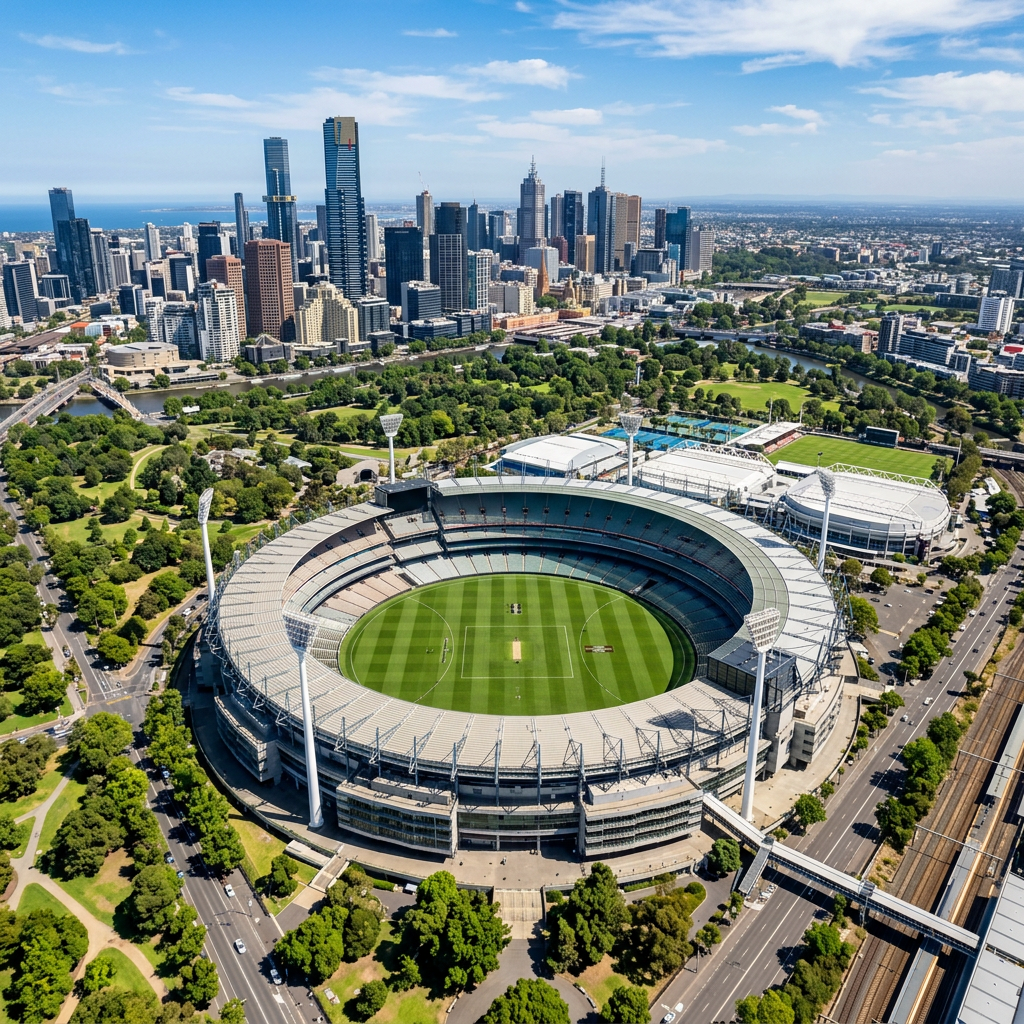
If that doesn't blow your mind — 4 billion containers would cover the entire playing surface of the MCG 2,686 times, or bury it under 148 metres of containers.

This raises a valid question to the nation, the scheme coordinators, state governments and the federal government —
ARE YOU SERIOUS?!
And those aren't even the numbers that should concern you most.
We're about to launch something significant in the space of philanthropy and environmental impact. But first, Australia needs the answers to these two questions.
What is actually going on with our Container Deposit Schemes?
And why is this still happening at this scale?
Because once you see what I'm about to show you — there is only one acceptable outcome. Fix it. RIGHT NOW. And we have the solution.
Where does your money go?
Despite schemes operating in every state and territory, 4 billion containers still go to litter and landfill every year.
But what I didn't tell you is…
That's $400 million dollars in unclaimed refunds — money consumers already paid at the checkout, retained by state coordinators.
You paid a 10 cent deposit when you bought the drink and you get it back when you return the container. But just under half of Australians aren't returning them — and hardly anyone knows where the 10 cents actually comes from, with most thinking it comes from the government.
And here's where it gets worse.
The rest ends up in kerbside recycling, where Material Recovery Facilities run by local councils or third parties collect those refunds — estimated to be over $150 million dollars a year.
$400M
Unclaimed refunds retained by state coordinators
+$150M
Captured by kerbside MRF operators, not consumers
$550M+
Total consumer-paid money not returned to the people who own it — every year
Over $550 million a year in consumer-paid money is not being returned to the people who own it.
The scheme isn't even attempting to change that. According to the findings of the Queensland Parliamentary Inquiry into the container deposit scheme, it's set up this way — and a deep dive uncovered even more shocking truth about the scheme.
It is far more sinister than first thought.
So the real questions are:
Why aren't people being educated about their own money?
And why isn't that $550 million being used differently — as a stronger incentive to change behaviour, reduce litter and landfill, and build a true circular economy? Which is the entire reason these schemes exist.
The Performance Report Card
States are required to reach a minimum 85% return target.
Currently, only the Northern Territory has reached it.
Amber line = 85% target
⚠️ South Australia
Has been running their scheme for nearly 50 years — the longest in Australia and one of the longest in the world. They're currently sitting at 75% and trending backwards.
Queensland Parliamentary Inquiry
10 referrals to the Crime and Corruption Commission.
Queensland was under a Parliamentary Inquiry to assess the underperformance of their scheme — and that inquiry resulted in 10 referrals to the Crime and Corruption Commission.
We're not just talking about mismanagement.
We're talking about conduct serious enough to warrant a corruption investigation.
So when I ask — are you serious? — I mean it.
This problem hasn't been addressed or solved until now. And it's not simply an infrastructure issue — it's a motivation and behavioural problem.
Each state captures early adopters when a scheme launches. But the majority of the population don't know where the money comes from, and they don't care about 10 cents. They never did. And the data shows they never will.
Increasing the refund to 20 cents has been proposed. But it's a relabelling nightmare — costly, logistically complex, and already rejected by Queensland, Coca-Cola, and Lion beverages.
And… people will now pay more at the till and state coordinators will keep more consumer owned money if containers are unclaimed.
So we built something different — based on the findings of the data when we audited the entire scheme.
The Solution
A behavioural system that layers a gaming experience over the existing scheme.
Prize Pools
Leaderboards
Instant Wins
Mega Draws
Built-in Philanthropy
All designed to make participation compelling at scale — supported by proven behavioural science, with the potential to drive returns rates past the legislated 85% return target.
And to recap — we're a social enterprise. All of this funds hundreds of millions in philanthropy, directed to the causes that need it most.
Imagine seeing a can on the ground and immediately thinking…
"That's worth 10 points and could win me a life-changing cash prize — so you pick it up."
People won't litter as much once the games are live — and more people will clean up after the ones who do.
Now Launching
The Behaviour Change Experiment
Australia's largest behavioural experiment — feeding directly into the 10c Recycling Games.
A gamified solution that could see millions of Australians playing for a chance to win a share of well over $500 million every year — paid for by the container returns themselves.
The scheme already has a potential annual payout of $1.2 billion — 10 cents at a time.
We're not taking from anyone already participating. Not from charities, community groups, kids raising pocket money, or the people who go through bins. Nothing changes for them. Playing the 10c Recycling Games is simply an added option — take the refund, donate to a cause, or play to win.
The Rollout
This is a strategically staged rollout.
Phase One
$100 million
Phase one draws $100 million dollars from the existing $400 million unclaimed refund pool:
$50M
Into prize pools
Driving behaviour — getting Australians to engage, watch a video, answer questions, and opt in.
$50M
Into advertising
A $50M prize pool with free entry — the reach and results will speak for themselves.
Once we have the data from the EOI, we scale.
Phase Two — Full Rollout
$200 million
A further $200 million dollars funds the full rollout:
$100M
National prize pool at launch
Front-loaded into a national prize pool the moment the games go live.
$80M
Mass awareness campaign
A second national advertising campaign when the games go live.
$20M
Platform & team
World-class platform development, operational infrastructure, behavioural science, technology and media teams, and expansion of the philanthropic model.
People of Australia — this is your money.
So it's your call.
This unlocks a system capable of influencing behaviour across a $1.2 billion dollar annual container economy — while completely saturating Australia, hitting recycling targets, and ensuring we reuse what has already been manufactured.
"People aren't playing by the old rules. Most never did and never will. That doesn't mean we change the rules. We change the entire game by applying the right incentives to a system that already exists."
This has already been presented to a couple of state CDS coordinators and has been fully validated — we even got a yes from one that was then overturned for them to continue with a strategy they had in place even though they are stalling with near zero growth.
And I'm not taking no for an answer this time.

Come on Australia, we can do much better than what we've been doing. Our beautiful planet is our responsibility, and collectively, we can make the change for a brighter future for everyone and the environment.
So here we are.
Let's recap what is actually happening in this country.
4 billion containers every year going to litter and landfill.
Over $550 million dollars not returned to the people who paid it.
A scheme that isn't driving the behaviour it was built for or acting like it's meant to.
A corruption investigation in Queensland that could escalate to a Commonwealth Royal Commission into the design and operation of Australia's container deposit schemes.
To every Australian, the media, and the people running these schemes —
Are you going to answer for this?
Or should we simply launch the largest behavioural experiment this country has ever seen, and let the results do the talking?
Because we're not continuing like this.
I'm saying NO to the current system — because the scheme isn't doing what it was designed for, and the environment along with millions of people are paying the price.
This ends right now as we say YES to the Behaviour Change Experiment and the 10c Recycling Games.
Australia, it's time.
Sources & Disclaimer: All figures cited are drawn from state CDS Annual Reports, EPA publications, Parliamentary Inquiry records, and independent industry research. Where a single national reporting framework does not exist — and it doesn't — state-level data has been extrapolated to produce national estimates. These figures are presented in good faith based on the best publicly available data. Full source documentation is available on request. The Queensland Crime and Corruption Commission referrals are a matter of public Parliamentary record.

Important Legal Disclaimer
Please read and acknowledge these terms before continuing.